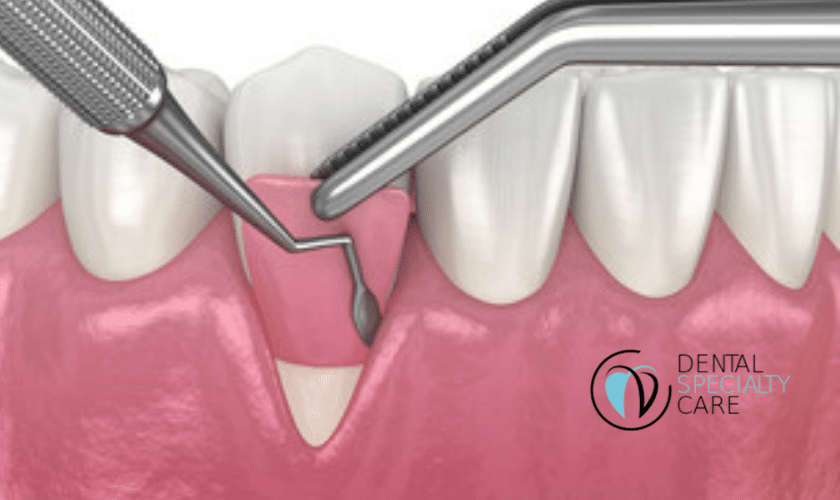
Another procedure provided by our Lancaster periodontist is gum graft surgery. Please call our office as soon as possible if you require gum graft surgery.
A gum graft (also known as a gingival graft or periodontal plastic surgery) is a term used to describe a group of surgical periodontal operations aimed at covering an exposed tooth root surface with transplanted oral tissue.
The gingival recession caused by periodontal disease is the most common cause of exposed tooth roots. Other typical causes include over-aggressive brushing and trauma.
Some of the most prevalent forms of gum grafting are as follows:
- Gingival graft (free gingival graft) – This surgery is frequently used to thicken gum tissue. A layer of tissue is taken from the palate and transferred to the location where gum recession has occurred. Both areas will heal fast and without causing permanent injury.
- Subepithelial connective tissue transplant — This is a typical treatment performed to hide exposed roots. Tissue is taken from the outer layer of the palate and transferred to the region of gum recession quite painlessly.
- Acellular dermal matrix allograft — This method employs medically prepared, donated human tissue as the graft’s tissue source. The benefit of this treatment is that no donor site from the patient’s palate is required (and thus, less pain).
The Benefits of Gum Grafting
A popular periodontal treatment is gum grafting. Though the phrase may conjure up images of horror, the treatment is routinely carried out with great results.
Here are some of the primary advantages of gum grafting:
- Reduced sensitivity – When the tooth root is exposed, eating or drinking hot or cold foods can induce acute dental sensitivity. Gum grafting surgery permanently covers the exposed root, alleviates pain, and restores gum health.
- Improved look – Gum recession and inflammation are symptoms of periodontal disease. Gum recession and root exposure can make teeth appear longer than they are and the smile appears “toothy.” Gum grafting can make teeth appear shorter, more symmetrical, and more visually appealing. Furthermore, surrounding tissue might be improved and increased for aesthetic objectives throughout the surgery.
- Improved gum health – Periodontal disease may advance quickly and damage gum tissue. If left untreated, a significant quantity of gum tissue can be lost in a relatively short period. Gum grafting can aid to stop tissue and bone loss, preventing future complications, and shielding exposed roots from decay.
What exactly is gum grafting treatment?
Once the necessity for gum grafting surgery has been recognized, the dentist will want to undertake various treatments before gum grafting. To eliminate calculus (tartar) and microorganisms, the teeth must first be properly cleaned supra and subgingivally. In addition, the dentist in Lancaster can give literature, guidance, and instructional materials to improve the efficacy of homecare and help prevent the risk of periodontal disease in the future.
The gum grafting operation is generally done with local anesthesia. The specific method will vary depending on whether the tissue is taken from the patient’s palate or a tissue bank.
At first, tiny incisions will be made at the recipient location to create a small pocket for the transplant. The connective tissue transplant is then placed into the gap between the two portions of tissue via a split-thickness incision. Because the graft is often somewhat bigger than the recession region, some surplus will be seen.
Sutures are frequently used to help support the graft and prevent it from migrating away from the intended location. During the first week after recuperation, surgical material is utilized to protect the surgical area. In roughly six weeks, the gums will be uniform and healed.