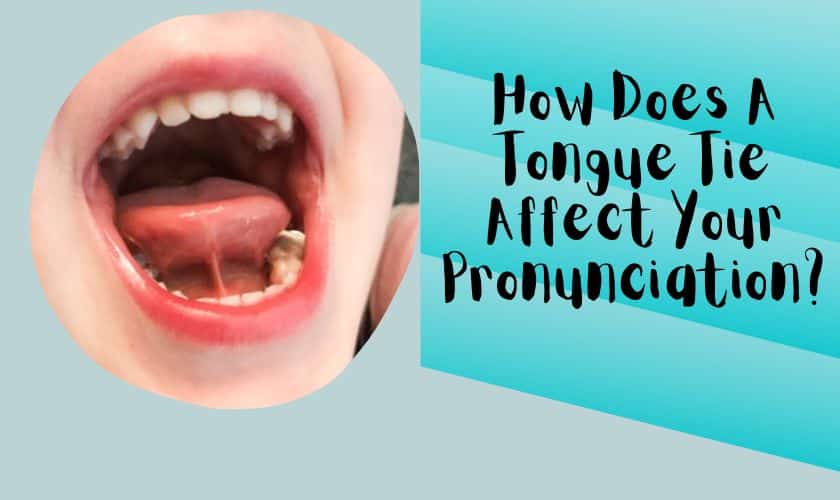
Are you struggling to pronounce certain words properly? It may be due to a tongue tie, also known as ankyloglossia. A tongue tie is a condition where the frenulum, or band of tissue connecting the underside of the tongue and the floor of the mouth, is too short or thick. It can affect your tongue’s range of movement and function in everyday activities such as speaking and swallowing food. This blog will discuss how a tongue-tie affects pronunciation, how it’s diagnosed, and the potential treatments available.
What Is A Tongue Tie?
A tongue-tie is a congenital condition that affects roughly 4% to 10% of newborn babies. While it’s common in babies and children, tongue-ties can also affect adults.
A frenulum is a naturally occurring band of tissue that extends from the underside of the tongue to the floor of the mouth. When this frenulum is too short or thick, it restricts movement and prevents your tongue from extending properly. A frenectomy is a procedure that involves snipping or laser cutting this frenulum to free up your tongue’s range of motion.
How Does A Tongue-Tie Affect Your Pronunciation?
When you have a tongue-tie, it can be difficult for air to pass correctly through your mouth when speaking. It makes it hard to produce certain sounds accurately and impacts how clearly words are articulated by increasing your chances of mispronouncing.
Tongue-tie can also cause difficulty with swallowing and eating due to your tongue’s restricted range of motion when trying to move food around your mouth. It could lead to problems such as choking, gagging, and even dental issues.
Diagnosing A Tongue-Tie?
A frenectomy is a minor surgical procedure used to diagnose a tongue-tie. It involves cutting the frenulum under general or local anesthetic, releasing the tension on the frenulum, and allowing more movement for your tongue. After reviewing your medical history and performing a physical exam, your doctor may suggest a frenectomy if they think you must be able to speak clearly.
Are potential Treatments Available?
A few different treatments can be used to correct tongue-tie and help improve pronunciation.
Surgery: A frenectomy is the most common treatment for tongue-tie, though this will depend on your age and the severity of the condition. Your doctor may also recommend laser surgery, which uses a laser beam to cut through the frenulum with minimal trauma. Both types of surgery do not require a lengthy recovery time and can provide relief from symptoms almost immediately.
Non-surgical Options: If you’re unable or unwilling to undergo surgery, some non-surgical options are also available. These include speech therapy, where an experienced therapist can work with you to help improve pronunciation, and frenotomy, which is a procedure that involves stretching the frenulum manually.
The Final Thought
A tongue-tie can significantly impact your everyday life, from eating to speaking properly. It could indicate a tongue-tie if you struggle with certain words or sounds. A frenectomy or frenotomy are two potential treatments available for this condition and should be discussed with your doctor to determine which one is best for you.
A tongue-tie is a congenital condition where the frenulum, or band of tissue connecting the underside of the tongue to the floor of the mouth, is too short or thick. This can restrict movement and prevent your tongue from extending properly, leading to difficulty with speaking and eating.
When you have tongue-tie, it can be difficult for air to pass properly through your mouth when speaking. This makes it hard to produce certain sounds correctly and impacts how clearly words are articulated by increasing your chances of mispronouncing them.
Different treatments are available for correcting tongue-tie and helping improve pronunciation, such as a frenectomy, laser surgery, speech therapy, and frenotomy. Your doctor can advise you on the best treatment for your individual needs.